Push The Luck
- 3.8
- Rating
- 100.00K
- Installs
- Free
- Price

 Analysis by App-foxy
I approached Push The Luck expecting a quick trivia game rather than a traditional question-and-answer quiz. That distinction matters from the first tap. The central idea is simple: choose the correct box and rely on your luck to keep moving. It is designed for short sessions, casual decisions, and the small satisfaction of getting through another choice without turning the experience into a serious study routine.
That makes it an easy game to understand, but not necessarily one that will suit every trivia fan. If you want detailed explanations, carefully balanced rounds, or a large competitive knowledge system, this is probably too lightweight. If you enjoy making quick choices and seeing whether your judgment pays off, it has a more approachable rhythm. I found the appeal strongest when I treated it as a brief break rather than a game I needed to master in one sitting.
What the first launch feels like
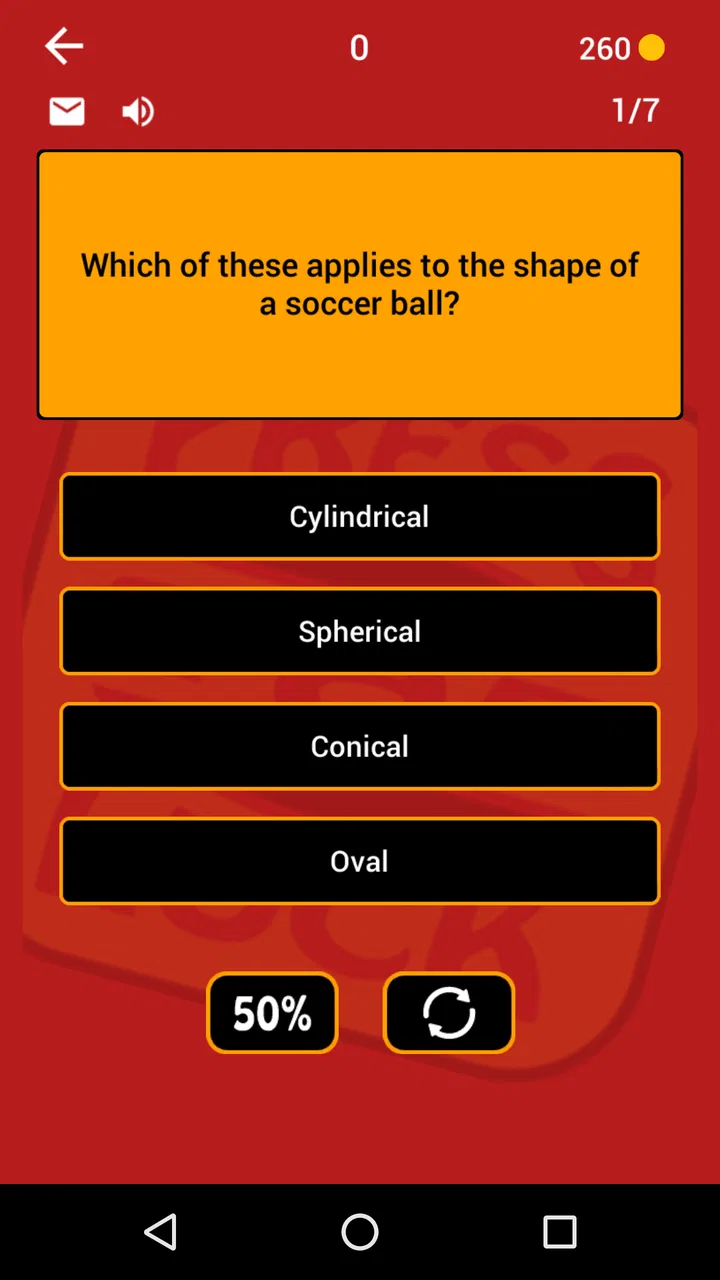
Cadev Games keeps the premise focused. This is a free trivia title for Everyone, and its store summary points toward the main interaction: pressing the correct box while taking a chance. You do not need to learn a complicated control scheme before starting. The important thing is to understand that each decision combines knowledge with risk, so a correct answer is not only about remembering something; it is also about choosing confidently.
You May Also Like

 Blood Strike: 2.5 Anniversary
Blood Strike’s Loadouts Turn Every Drop Into a Tactical Gamble
A close look at Blood Strike’s custom loadouts: how fast access to signature weapons reshapes its battle royale rhythm, rewards preparation, and narrows the gap between fights.

 Pandora - Music & Podcasts
Pandora’s Music Is Easy to Start, but Harder to Recover
Pandora’s strength is its low-effort path from a seed to a station. Its weak spot is how much confidence it asks you to place in connection, setup, and quiet recovery.

 8 Ball Pool
 Is Built on Rivalries, Rematches, and Routine
A close look at the rivalries, rematches, shared routines, and unanswered safety questions that turn a quick pool match into a persistent mobile community.

 Samsung Music
’s Quiet Strength Is Playing What You Already Own
Its reach comes less from spectacle than from dependable access to a personal library. That simplicity is both the app’s strongest retention engine and its ceiling.

 AccuWeather: Weather Radar
AccuWeather Review: A Quick, Clear Forecast for Everyday Decisions
For everyday plans, the best forecast is the one you can understand quickly. AccuWeather makes rain timing, radar, and local conditions easy to act on, with a few trade-offs.

 Hill Climb Racing
Why Hill Climb Racing Still Turns Crashes Into One More Run
A tiny car, a bumpy hill and one more upgrade: Hill Climb Racing keeps resurfacing because its simple chaos makes every near-miss feel personal.
More From Our News Desk



That combination gives the game a different mood from a standard trivia app. In a conventional quiz, I usually concentrate on selecting the answer I believe is true. Here, the box-based format makes the act of choosing feel more immediate. The interface becomes part of the challenge, because hesitation can make a simple decision feel more uncertain than it first appeared.
The game is suitable for a broad audience, reflected in its Everyone age rating. I would still describe it as best for people who enjoy casual puzzle-like tension rather than players looking for educational depth. It can work for a short break while waiting for an appointment, during a commute, or when I want something interactive that does not require a long commitment.
Its history also gives some context. The game was released on February 1, 2018, and the current version is 3.6. It supports devices running Android 7.0 or later. That makes checking your phone or tablet’s software version a sensible first step before installing, especially if you are using an older device. On compatible hardware, the basic premise is easy to grasp without a lengthy introduction.
Starting without overthinking the rules
My advice to a first-time player is to begin with a relaxed mindset. The wording suggests a game built around luck, so a failed choice should not feel like proof that you are bad at trivia. The best way to understand the experience is to play several decisions in a row and notice how the game presents the boxes, how quickly it expects an answer, and how much confidence affects your choices.
I would not begin by searching for a perfect strategy. At the start, the useful goal is simply to identify what the game considers a correct box and how the progression responds after a successful selection. This is more practical than trying to predict every possible outcome before you have experienced the rhythm yourself.
One non-obvious advantage of this approach is that it separates two kinds of mistakes. Sometimes I may misunderstand the question or fail to recognize the right answer. At other times, I may know enough but choose too cautiously because the box format creates pressure. Keeping those situations separate helps me decide whether I am enjoying the trivia element or merely reacting to the risk.
Getting to the first meaningful success
The first satisfying moment comes when I stop treating each box as a random button and start connecting the question with the decision in front of me. I read the prompt once, identify the answer I trust most, and then select the corresponding box instead of repeatedly tapping around. That sounds obvious, but it is the point where the game changes from a vague luck test into a small exercise in confidence.
For a new player, I recommend using the first session as a calibration period. Notice whether the game rewards quick recognition, careful reading, or a mixture of both. If the wording seems straightforward, answer directly. If two possibilities look close, avoid inventing elaborate reasoning that the question does not support. In a game built around choosing the correct box, unnecessary hesitation can be as disruptive as not knowing the answer.
A useful everyday scenario is playing a few rounds while waiting for food at a café. I can start without setting aside a full evening, make several decisions, and stop when the order arrives. The format is better suited to that kind of interrupted attention than a long quiz that expects me to remember a detailed score or maintain a lengthy campaign.
Another practical use is sharing the decision with a friend sitting nearby. One person can read the question while the other chooses, then switch roles. I would not present this as a formal multiplayer feature, because the game’s core experience remains the individual act of pressing a box. Still, the uncertainty around a choice naturally creates conversation: one person may know the answer while the other is more willing to take the chance.
Where new players can become confused
The biggest source of confusion is the relationship between trivia knowledge and luck. A player may assume that every outcome can be controlled through knowledge alone, then feel disappointed when the game emphasizes chance. I found it more helpful to think of knowledge as improving the decision, not guaranteeing a perfect run. That expectation makes the occasional setback feel consistent with the design rather than like a broken promise.
The short store description, “Push The Luck,” also captures the game’s attitude. It is not presenting itself as a study tool or a deep quiz encyclopedia. If you install it expecting explanations after every response, extensive learning material, or a carefully structured lesson path, you may wonder why the experience feels so compact. The appeal is in the choice and its immediate consequence.
Another possible misunderstanding is assuming that a free download means the entire experience is free of commercial interruptions or optional spending. The game is free to play, with in-app purchases ranging from $1.49 to $19.99 per item. I recommend deciding in advance whether you want to spend anything at all. For a casual title built around short decisions, it is easy to make an unplanned purchase simply because you want to continue a satisfying run or remove a moment of friction.
That does not make the purchase system automatically unreasonable, but it does change how I would approach the game. I would first play it as a no-cost experiment, learn whether the box-selection loop is genuinely enjoyable, and only then consider whether any optional item feels worthwhile. A player who dislikes in-app purchases on principle may prefer to skip this one, even if the initial download costs nothing.
Reading the game on its own terms
The rating gives a useful but limited signal. Push The Luck has a 3.9 average from around 1.4 thousand ratings, alongside more than four hundred written reviews. I read that as evidence of a mixed but established audience: enough people have tried it to form a recognizable opinion, yet the score does not suggest universal appeal. That matches my impression. The concept is clear and distinctive, but its simplicity can feel refreshing to one person and repetitive to another.
It has also passed the 100K-install mark, which places it beyond the level of an obscure experiment. Even so, popularity should not be confused with depth. The game’s reach makes sense because the premise is easy to explain, while the modest rating reminds me that a simple loop needs to match the player’s expectations very closely.
Compared with a conventional trivia app, this game is less attractive for someone who wants to build knowledge over time. Standard quiz alternatives usually make the question itself the main event, often with categories, explanations, or a more explicit sense of progress. Here, the box and the risk are central. I would choose Push The Luck when I want a brisk decision game; I would choose a more traditional quiz when I want to test a subject carefully or understand why an answer is correct.
It also differs from a pure luck game. The trivia framing gives me a reason to think before pressing, so the experience is not simply random tapping. The trade-off is that players who prefer transparent odds may find the design less satisfying than a game that clearly explains every possible outcome. The uncertainty is part of the personality, but it can also be the main barrier.
Small habits that make the experience better
My first practical tip is to read before touching the boxes. With a compact interface, it is tempting to react immediately, but a quick full read reduces mistakes caused by rushing. I also try to commit once I have a reasonable answer. Constantly revisiting the same choice does not create more knowledge; it usually creates more doubt.
My second tip is to use short sessions deliberately. The game’s strength is its accessibility, and playing for a few minutes preserves that advantage. If I continue long after the decisions stop feeling interesting, the simple loop can become noticeable rather than enjoyable. Treating it like a pocket diversion works better than expecting it to replace a larger game.
My third tip is to separate personal goals. If I am playing for entertainment, I accept that luck may interrupt a good run. If I am playing to challenge my memory, I pay attention to the questions I recognized slowly and use those moments as a reason to think about the subject afterward. The game itself should not be treated as a complete learning course, but it can still reveal where my confidence is weaker than I assumed.
A fourth consideration is device age. Since Android 7.0 is the minimum operating system, owners of older phones should check compatibility before planning around it. For someone using a newer Android device, this requirement is unlikely to be a problem. The more important decision is whether the compact trivia-and-chance format matches your taste.
Who will enjoy it, and who should pass
I would recommend it to players who like quick trivia prompts, simple controls, and a little uncertainty in every choice. It is especially suitable for people who do not want to memorize complicated rules before getting started. The first meaningful success arrives quickly because the central action is easy to understand: consider the question, press the box that seems right, and see how the decision develops.
It may also suit families or friends looking for a lightweight conversation starter, provided everyone understands that the game is not designed as a formal educational activity. The Everyone rating makes it broadly approachable, but adult players who want a demanding knowledge challenge may outgrow it quickly.
I would skip it if you need detailed answer explanations, strict competitive balance, or a substantial progression system. I would also look elsewhere if you dislike chance influencing a trivia result. In those cases, a classic quiz app with clearer scoring and more educational feedback will probably feel more rewarding. The same is true for players who want a long-form game with a story, exploration, or a large collection of distinct mechanics.
My recommendation after trying the full loop
Push The Luck works because it does not hide its central idea behind unnecessary complexity. I can understand the interaction quickly, make a decision, and enjoy the tension between what I know and what might happen next. That makes it a convenient choice for short breaks and casual social play.
Its limitations are equally clear. The simplicity leaves less room for players who want deep trivia training, detailed feedback, or a strong sense of long-term advancement. The free entry point is helpful, but the available in-app purchases mean I would keep spending under control and evaluate the basic experience first.
For a first-time user, my suggested path is straightforward: install it on a compatible device, play several choices without chasing a perfect result, and decide whether the uncertainty feels entertaining or frustrating. If the first successful selection gives you the small rush the game is aiming for, you will probably understand its appeal immediately. If you are mainly looking for explanations and measurable learning, a traditional trivia alternative is the better fit.
Overall, I see this as a modest but distinctive trivia game from Cadev Games. Its 3.6 version, free starting point, broad age rating, and simple box-based decisions make it easy to try. I would recommend it to a friend who wants a fast, low-pressure game with a touch of luck, while being honest that its narrow loop will not satisfy everyone. The right reason to play is the moment-to-moment choice, not the promise of a complete trivia course.
FAQs for Push The Luck
01What is the main objective of Push The Luck?
Push The Luck is a strategic puzzle game where players aim to progress through increasingly challenging levels by making calculated moves. The objective is to accumulate points by strategically placing tiles, avoiding obstacles, and maximizing bonuses. Each level presents unique challenges that require both skill and luck to overcome.
02Is Push The Luck free to download and play?
Yes, Push The Luck is free to download on both Android and iOS platforms. However, the game offers in-app purchases for players who wish to enhance their gaming experience. These purchases may include extra lives, power-ups, or removing ads for an uninterrupted gameplay experience.
03Are there any age restrictions for playing Push The Luck?
Push The Luck is designed for a broad audience and is suitable for players aged 4 and up. The game’s content is family-friendly, featuring colorful graphics and a simple interface that makes it accessible to both younger players and adults looking for a fun and engaging puzzle challenge.
04Does Push The Luck require an internet connection?
Push The Luck can be played offline, making it ideal for gaming on the go without the need for a constant internet connection. However, some features, such as leaderboards and in-app purchases, require an internet connection to function properly.
05What devices are compatible with Push The Luck?
Push The Luck is compatible with most modern Android and iOS devices. It is optimized to run smoothly on smartphones and tablets with updated operating systems. Check the app store listing for specific OS version requirements to ensure compatibility with your device.
Pros
- Engaging gameplay with simple mechanics.
- Visually appealing graphics and animations.
- Regular updates with new levels.
- Easy to learn
- hard to master challenges.
- Minimal ads for uninterrupted play.
Cons
- In-app purchases can become costly.
- Some levels feel repetitive.
- Occasional lag on older devices.
- Limited customization options.
- Requires internet for certain features.

Push The Luck
Gallery